
Consider Joining these open Sessions!
Contact session chairs for more details!
Mobility and Interaction Phenomena: Perspectives from the Andes and the Amazon
This session seeks to explore the diversity of perspectives on the phenomena of mobility and interaction in the Andes and the Amazon, two regions shaped by complex dynamics of cultural contact, exchange, and social transformation. Through a multidisciplinary approach, researchers from various fields —archaeology, anthropology, history, linguistics, and ancestral knowledge— are invited to reflect on how the movement of people, things, goods, and ideas has shaped cultural and social landscapes across different periods. While the discussion focuses on rethinking the increasingly fragile colonial barrier that separates the Andes and the Amazon as contrasting areas, contributions highlighting the diverse ways Andean and Amazonian communities interact within their local environments are also encouraged. This session aims to create a dialogue that emphasizes both convergences and divergences in interaction as a complex phenomenon—extending beyond mere trade to encompass a wide range of possibilities. It seeks to foster new perspectives on the construction of identities, the dynamics of power, and cultural agency in these two fundamental regions of South America.
Keyworkds: Mobility, interaction, Andes-Amazonia, landscapes
Chairs:
Christian Cancho, UVA — cc2pa@virginia.edu
Gabriel Santos de Oliveira, UVA — pxm5fx@virginia.edu
Transformative Cultural Materiality: Archaeologies of Displacement, Identity, & Persistent Lifeways
Movement, displacement, and migration change our understanding of the world, but it does not change who we are. When people are displaced though political and social actions they continue to carry the memory of cultural identity. This identity expresses itself through the material world as evidence of the persistent nature of many racialized, marginalized, and displaced peoples. The result of this geographic upheaval leads to cultural persistence whereby people manipulate the material world in unfamiliar surroundings that reflects the formation of new identities, protects traditional lifeways, and demonstrates their unwillingness to accept colonial and racial logics. This manipulation can be described as transforming material culture where people in uncustomary spaces reframe the paradigm of power structures. Archaeologists can explore the theory of persistence using this paradigm by considering how the material past conventionally exists within a socio-political hegemonic lens. Through the power of memory and community new material worlds are constructed giving way to a keen sense of placemaking that brings lived experiences into a historical continuum and bridges the past and present to create the capacity for freedom building in the future. We invite participants to interrogate concepts of persistence in a new framework that highlights the innovative and diverse ways people maintain control of their cultural identity and to discuss how the materiality of cultural persistence creates a sense of placemaking through dispossessed and displaced people across geopolitical landscapes. We aim to demonstrate how persistence shapes placemaking through an analysis of transformative materiality and argue that when people are forcefully displaced, relocated, or voluntarily migrate they deploy the tools of the material world to reassert their cultural identity in meaningful ways.
Keywords: persistence, transformation, placemaking, power, identity
Chairs:
Zachary Qualls, University of Tulsa — ztq556@utulsa.edu
Nkem Ike, University of Toronto — nkem.ike@utoronto.ca
Gabrielle Miller, NMAAHC — millergc@si.edu
More than the Stories We Tell: Considerations in the Development and Sharing of Archaeological Narratives in the Age of Community Archaeology
In the late 1990s a number of prominent American historical archaeologists began to develop fictional narratives of events in the past based on the results of archaeological investigations. The goals of this movement were to make the results of archaeological research more relevant and meaningful to the public while attempting in some cases to also personalize, contextualize and demystify the research process. I previously argued that this focus on interpretive narrative was more than just “telling the story;” it in fact recast narrative interpretation at the center of the archaeological enterprise (McCarthy 2003). Subsequently, a number of other archaeologists have recognized that all archaeological writing is a form of narrative creation (e.g., King 2012). This session presents papers that address the process of creating archaeological narratives writ large, that is, considered as broadly and inclusively defined as possible, and considers the role of such efforts as part of the Community Archaeology movement.
Keywords: Narratives, Story-telling, Community, Sharing, Public
Chair: John P. McCarthy — delmarvajohn@gmail.com
ARCHAEOLOGY & THE BODY: A ZINE FOR WORKERS
Calling all archaeologists with a body! We want your scraps, your bits, your memories, your testimonies to the experience of archaeological labor on your skin and bones. At TAG 2025, we’ll assemble a zine that gathers and engages with evidence of how archaeology works on the body as we work in archaeology. Within the increasing number of publications on archaeological labor, as well as conference sessions– including TAG 2021 at Stanford– there are references to the physical effects of archaeological work on the body. Such scholarly discussions of archaeological labor have started to cohere around the possibilities and potentials for archaeological workers to unionize, but also the obstacles for organizing entailed in the diversity of work and workers within archaeology. We argue that documenting and recognizing both shared and particular embodied experiences of archaeological labor is a crucial step toward labor solidarity in archaeology. Archaeological work can be energizing and strengthening; it can also be uncomfortable, tiring, and disabling. Our bodies might sunburn, constipate, menstruate, dehydrate, and the work of archaeology impacts these body processes just as these bodily experiences impact our work. We are seeking contributions of: Photographs, Artwork, Short recollections (under 500 words), News clippings, Poetry, Receipts and bills, Social media posts, Paper ephemera … that speak to the impact that participating in archaeological work has had on the body, or how negotiating bodily functions affects archaeological labor. We hope that the assemblage of these bits and pieces will convey widely shared experiences of the relationship between archaeological labor and the body as well as particular experiences shaped by race, gender, class, disability, and other identities. In Williamsburg, we will have a freeform and open conversation about our contributions, and will work together to assemble a zine for copying & distribution throughout the community of all who provide labor to the project of archaeology.
If you are interested in this session – please fill out this quick form:
Keywords: labor, work, body, zine, curation
Chairs:
Allison Mickel, Lehigh University — ajm717@lehigh.edu
Sam Holley-Kline, University of Maryland — shk@umd.edu
Travis Corwin, North Carolina State University — tlcorwin@ncsu.edu
Crossing Knowledge Streams: Native-Archaeological Dialogue
This roundtable examines the intersection of Indigenous knowledge systems and archaeological practice in Virginia, bringing together tribal members, archaeologists, and cultural resource managers. The discussion features perspectives from practitioners working in cultural resource management—where most archaeological work now takes place—and academic contexts. Representatives from federally recognized tribes, along with members of Virginia’s state-recognized tribes, will join state officials in examining how tribal sovereignty intersects with both CRM compliance requirements and academic research frameworks. This dialogue comes at a crucial period as eight Virginia tribes have received federal recognition since 2015, building on a history of reservation communities dating to the 1640s and an Indigenous presence spanning over 15,000 years. Participants will address fundamental questions of sovereignty and decision-making in archaeological projects, exploring how Indigenous archaeology can transform compliance-driven and research-oriented archaeological practice. The dialogue centers on tribal knowledge systems and authority, examining successful models where archaeological practice follows tribal priorities and protocols across CRM and academic contexts. Key themes include building sustainable tribal capacity in cultural resource management, ensuring tribal control over heritage interpretation, and developing research frameworks that respect Indigenous sovereignty. Through structured discussion of case studies and shared experiences, participants will examine opportunities for reshaping Virginia’s archaeological practice. Topics include implementing tribal authority in decision-making, developing tribally led research programs, and ensuring meaningful power-sharing throughout the research process. The roundtable aims to establish concrete steps toward an Indigenous-centered archaeological practice in Virginia while identifying priorities for future policy development that strengthen tribal sovereignty in heritage management.
Keywords: Virginia, Indigenous archaeology, Tribal sovereignty, Cultural resource management, Collaborative methodologies
Chair: Martin Gallivan, William & Mary — mdgall@wm.edu
Collaborative Ethno-cartography in Indigenous Communities
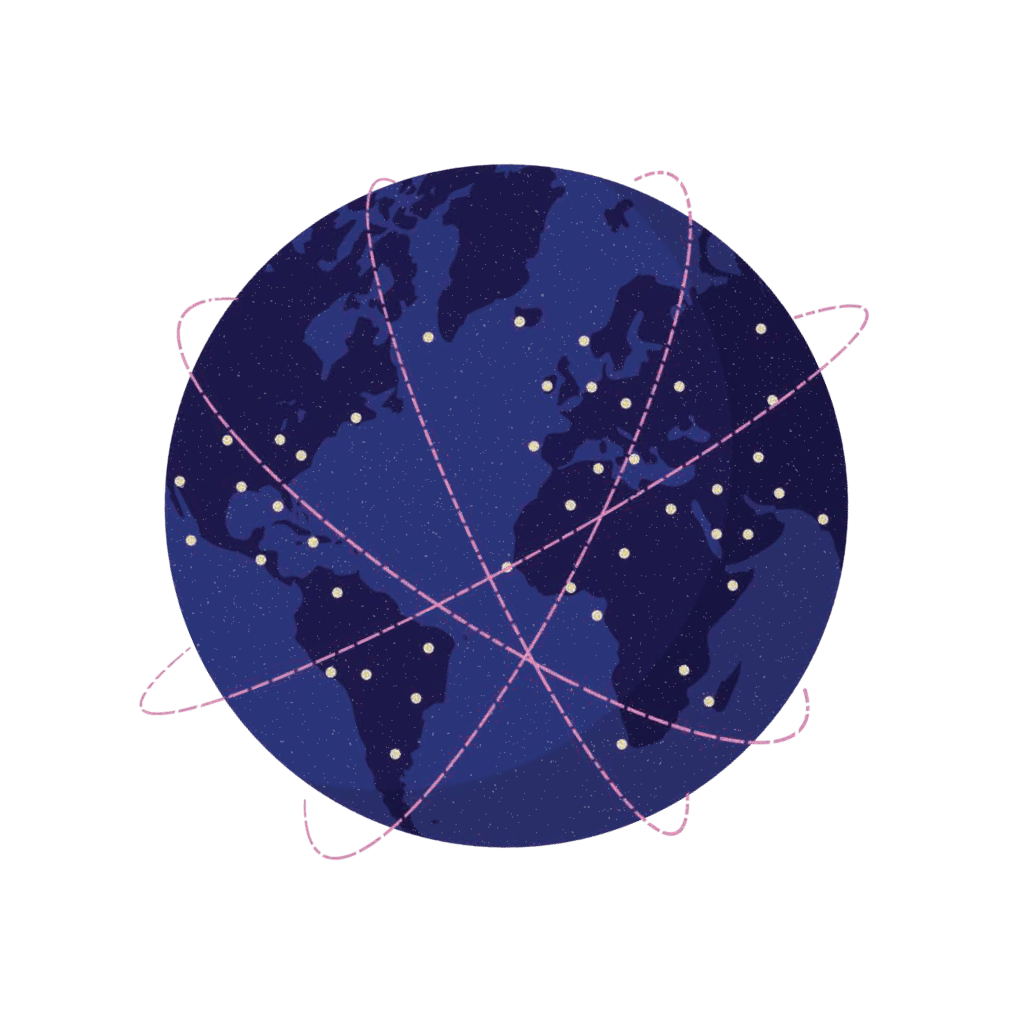
Anthropology and archaeology have a long tradition of mapping and conceptualizing Native territories. Oftentimes, maps reflected the scholars’ own understanding of villages, territories, and cities, more than Indigenous own historical relationship, experience, and conceptualization of the places they inhabit. This session brings together collaborative research experience of ethno-cartography, a methodological and theoretical approach to build together a more integral understanding of Indigenous multiple relation with places. This panel opens the possibility of reflecting together practices of ethno-cartography in fields of archaeological excavations, Indigenous memory in the aftermath of Cold War, and collaborative efforts to reconstruct past configurations of villages and territories.
Keywords: Indigenous Peoples, Memory Studies, Maps, Territory, Ethno-cartography
Chair: Sergio Palencia, William & Mary — sgpalenciafren@wm.edu
At Your Service: a self-reflexive examination of why archaeologists practice archaeology
As practitioners of archaeology, we often get asked “why do you dig up dead people’s garbage?” or something similar. This session goes beyond this surficial question, and asks the fundamental gut level inquiry of: “Who or what, at my core, do I practice archaeology in service of?” This question is the root of every theoretical framework and practice and should be at the forefront of our mind when undertaking any endeavor within our discipline. Do you practice archaeology in service to ancestors? In service to the public? How do you define a public to be in service to? In service to healing yourself or others? Or even in service to the expansion of knowledge? This session encourages individuals to answer this question for themselves within the context of their personal journey as an archaeologist. No matter if you are new to the field or have decades of practice under your belt, we all practice archaeology in service to something, and that something may change over time. You are invited to share this service journey with your peers and colleagues. Given the highly personal nature of why we do what we do, please personalize your presentation how you see fit, be it in poetry, film, multimedia experience, or prose.
Keywords: Service, Personal Reflection
Chairs:
Jennifer L.H. Tworzyanski, Minnesota Office of the State Archaeologist — jennifer.tworzyanski@state.mn.us
Melissa Cerda, Minnesota Office of the State Archaeologist — melissa.y.cerda@state.mn.us

The Black Atlantic as Community-Oriented Praxis
The Black Atlantic, according to Paul Gilroy, is a diasporic space created by Blacks, which now includes other people dispersed within the structures of feeling, communicating, and remembering. At its core, it encompasses Black identities and other groups with shared lived experiences. In this way, the transatlantic experience connects spaces and times in ways that defy normative frameworks. In this session, we seek scholars working in and through the Black Atlantic to discuss ways their work reflects communities and their actors. By synthesizing transdisciplinary approaches, we hope to challenge traditional conceptions of communities and broaden ideas of transatlantic communities of practice. We call on papers that use community-oriented epistemes to strengthen the intellectual property of local actors vis-à-vis their Atlantic experience. Submissions can address themes including critical Black geography, art and architectural history, material culture, and intangible heritage.
Keywords: Black Atlantic, community engagement, material culture
Chairs:
Abiola Ibirogba, Columbia University — aji2121@columbia.edu
Omokolade A. Omigbule, University of Virginia — rbg7tp@virginia.edu
Archaeological Narratives and the Future of Museum Anthropology
What is the role of archaeological narratives in museum anthropology? In what ways does archaeological practice, theory and method intervene in institutional storytelling? From the first cabinets of curiosity to the latest installations at world-renowned museums, the collection, curation and interpretation of objects has been employed to construct archaeological narratives within museum worlds. These narratives were foundational to the establishment of the museum as a cultural institution, based on cultural stewardship and colonialism. This session seeks to explore how the politics of institutionalized archaeology affect community representation and engagement within museums, with the aim of rethinking current conceptions of “collaboration”. We encourage papers that expose the dichotomies of archaeological narratives in the museum space. How may we challenge traditional archaeological representation of past material culture to (re)connect objects with contemporary world communities? What does the future of cultural stewardship look like within the so-called decolonized museum? We hope that participants will engage in provocative reflection of the purpose of archaeological narratives in order to reconceptualize some key aspects of current museum practice.
Keywords: narratives, museum anthropology, archaeology, ethics, cultural stewardship
Chairs:
Brian Boyd, Columbia University — brian.boyd@columbia.edu
Akrivi Liosi, Columbia University — al4775@columbia.edu
Sydney DeBerry, Columbia University — smd2244@columbia.edu
Annotations: Reworking the Past
The glyph for “gods” is scratched out and replaced with the singular for “god” on a temple wall. The window of an aging factory is bricked up, the structure’s function shifted and reimagined. An offering is left on the surface of an ancestral site. A grave is reopened to inter a second body. Another grave is opened to retrieve a cranium that is then plastered with clay. An archaeologist plucks an artifact from the ground and scribbles down some notes. Annotation is a constant human mode of engaging the traces of the past, involving a re-touching, re-marking, re-shaping, re-imagining of the semiotic world around us. Unlike citation, which merely references prior material records, annotation more squarely seeks to intervene. Unlike iconoclasm, annotation’s interventions are more constructive than destructive, seeking to comment upon, correct, fiddle with, and make additions. Annotation, in short, is simultaneously an act of interpretation and a material practice of transformation. This session invites participants to explore acts of annotation and their reverberations through the past to the present.
Keywords: semiotics, annotation
Chair: Jenny Ni, Columbia University — jn2512@columbia.edu
Vegetal landscapes
What would an archaeology of and from the vegetal look like? How might this starting point shift the conceptual frameworks within which plants are normally studied in archaeology? We suggest that centering our narratives on plant life and sociality, and how they unfold relative to human lifeworlds, rather than starting from the perspective of human plant use or plant symbolism has the potential to open up new questions for the field. What other possibilities exist for destabilizing conventional approaches to human-plant relationships that might bring previously unstudied regions into view? This session aims to explore a wide range of topics and questions, defining plants broadly to think capaciously about vegetal landscapes, and the forms of vegetal agency and archives that they encompass.
Keywords: vegetal agency, vegetal archives, human-plant relationships
Chairs:
Alexandria Mitchem, Columbia University — atm2161@columbia.edu
Zoë Crossland, Columbia University — zc2149@columbia.edu
Reimagining Archaeology: Undefining Boundaries and Engaging the Present
While many people view archaeology as the study of the past in the present, this conceptualization fails to recognize the ways in which the histories produced from it are both of and for the present. Rather, this session calls for a vocational activist approach that champions complexity as an equitable practice and recognizes multivocality and pluralist frameworks. This approach allows archaeology to challenege its inherent notions of exclusivity and superiority, demonstrating how both immaterial and material traces of the past continue to shape our present and inspire alternative futures. We ask: How can the discipline move beoyond the normalized capitalist-materialist hierarchies of the present and embrace relationality, pluralist histories and complex temporalities? How should archaeology engage meaningfully with contemporary crises and what responsibilities do the archaeologists have regarding stakeholders? And how can rethinking archaeology as a generative practice create space for healing, resilience, and community investment? We invite papers that critically examine archaeology’s entanglements with current challenges and crises. Case studies addressing environmental change, political conflict, ethnocentrism, or social justice are welcome, as are examples of studies that redefine–or undefine–the traditional boundaries of archaeological practice. Topics might include pandemics, modern media, education in and outside the classroom, climate change, war, poverty, or identity and display. Contributions applying ecofacts, nontraditional “materials”, native epistemologies, storytelling, sensory archaeology, or interdisciplinary approaches are likewise encouraged. Through these discussions, we aim to inspire new ways of thinking about archaeology’s role in the modern world, emphasizing its capacity to bridge past and present and/or question this bifurcation while fostering more inclusive, accessible, and dynamic understandings of time and memory. Papers that interrogate archaeology’s generative potential for addressing global and/or local challenges are highly encouraged. We also see a balanaced, global perspective and so welcome submissions that discuss a variety of places and times.
Keywords: Complexity; Presentist; Relationality; Vocational Activism; Multivocality
Chairs:
Robyn Price, Brown University — robyn_price@brown.edu
Danielle Kalani Heinz, CSU, Northridge — kalani.heinz@csun.edu
Are We There Yet?: Queering the Discipline and Finding Queer Ancestors
Until proven otherwise our forebearers, be they archaeologists or laypersons in history, are considered cisgender and heteronormative. However, those of us who identify as some form of queer understand intensely that the presence of queer ancestors, whatever their flavor, is overlooked and veritably silenced. This session is a space in which I encourage my panelists to consider how we look into the past to find queer kin and how we receive otherwise flat interpretations of history. Please feel free to work in a transdisciplinary fashion in which you draw from sibling fields of understanding. This could include but is not limited to the realms of Gender Studies, Science and Technology Studies, Folklore, a variety of area and regional studies, and so on. How are you queering the field of archaeology?
Chair: Gender Studies; Queerness; LGBTQIA+; Queer Histories; Queer Futurities
Chair: Kate Brock, William & Mary — kmbrock@wm.edu
The Role of Expertise in Archaeological Practice
Current archaeological scholarship emphasizes the importance of community collaboration and community based participatory research. Central to this is the recognition that communities are not only collaborators but also co-creators of archaeological narratives, from research design to the preservation and publication of sites. Archaeologists, inheritors of their antiquarian and colonialist roots, are traditionally situated as ‘experts’ in the creation of narratives about the past. This has led to the misapplication of archaeology in support of nationalistic ideologies and is still a legacy with which we grapple today. Furthermore, institutional frameworks have given archaeologists authority and legitimacy while devaluing community contribution creating a troubling binary. Recognizing that this conception of the archaeologist as singular “expert” can perpetuate inequities and obscure community agency, this session seeks to identify ways to counter these misapplications through multivocality and interrogate what constitutes archaeological expertise. By centering community involvement, we aim to redefine the production of archaeological narratives, emphasizing co-creation over hierarchy and situating archaeological work within broader social, political, and historical structures. We invite, and encourage, scholarship from broad geographic and temporal focuses to explore how centering community can redefine the production of archaeological narratives, recognizing regional praxis as a way to foster collaborative and interdisciplinary research.
Keywords: expertise, collaboration, community co-creation, nationalism, narrative
Chairs:
Madolyn Hyytiainen-Jacobson, UC Berkeley — madolynh@berkeley.edu
Tanya Bertone, UC Berkeley — tanya_bertone@berkeley.edu
Closed sessions:
Forum — Engagement with Things: Ethical Collections Work in Theory and Practice
The movement toward engaged, collaborative, and restorative archaeologies, broadly defined, is most visible in public-facing activities, from direct interactions with client and stakeholder communities to fieldwork to on-site interpretation. As we grapple reflexively with the field’s colonial roots and legacies, and work to develop new frameworks which integrate ethical concerns and praxis into all phases and aspects of the archaeological process, whether research- or development-driven, it is crucial to include collections work in the conversation. In this forum, panelists and attendees are invited to engage in a conversation on concerns and challenges related to ethical management, research, and interpretation of archaeological collections. Panelists will open the conversation, drawing on their work and experiences to introduce a range of issues for wider discussion. Topics will include (but are not limited to): practical and ethical challenges, as well as research and engagement opportunities presented by “legacy” and “orphaned” collections; building sustainability concerns into archaeological research design; balancing responsibilities related to both preservation and accessibility; the relationship between theory, method, and ethical praxis in collections-based research; NAGPRA, including revised consultation guidelines; obligations to various client, stakeholder, and descendant communities; and the role of collections work (analysis, management, interpretation, etc.) in community and collaborative archaeologies.
Keywords: archaeological ethics, collections management and curation, collections-based research, community engagement, material culture
Chair: Rebekah Planto, William & Mary — rlplanto@wm.edu

Ethical Clientage and the Democratization of Archaeological Knowledge in Virginia
The clientage model of public engagement, first developed by the New York African Burial Ground Project, acknowledges that researchers have responsibilities to multiple parties. They are beholden to professional standards, hiring institutions and business partners, and – perhaps most critically – ethical clients, or descendant communities with ties to the sites and histories under study. Ethical clientage positions archaeologists as advocates in service of particular descendant communities and requires the communities’ informed consent regarding research questions, investigatory practices, interpretation, and memorialization. The National Trust’s 2018 Rubric for Engaging Descendant Communities in the Interpretation of Slavery at Museums and Historic Sites builds on the principle of ethical clientage to advocate for structural parity and a shift in power such that descendants of enslaved ancestors have equal partnership in interpreting the history of these sites. This shift in power is not only more equitable; moving away from a single privileged vantage point also creates new avenues of research and greater sophistication of archaeological inquiry.
Keywords: community engagement; clientage; ethics; descendant community
Chair: Victoria Gum, William & Mary — vrgum@wm.edu


